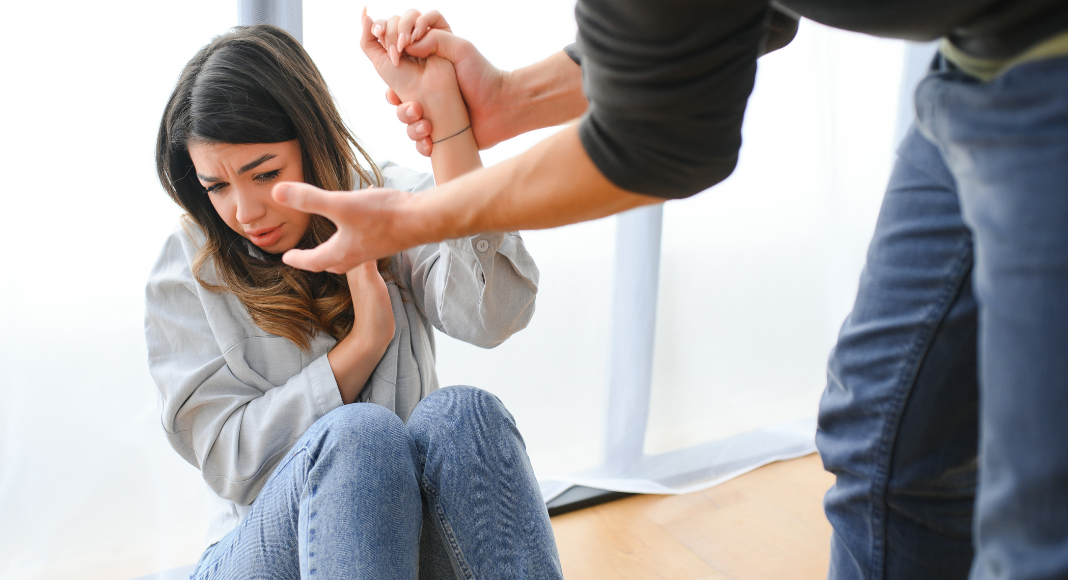
 We often don’t speak of the violence that takes place in our home.
Perhaps it is because we are made to believe that doing so goes against our family. Others may assume that the treatment is not harsh and therefore doesn’t constitute abuse. Others may not see a way out of their situation and choose to remain in the relationship for fear of the unknown. Many may think it is customary to be treated in certain ways because they have witnessed other family members doing so.
I cannot speak for all people and situations, but I can tell you that, as for me, all the above and more were relevant.
I grew up with two loving parents. They loved each other, and they loved their children. My mother decided in her mid-twenties, after giving birth to me, to let go of her hippie lifestyle. She focused on her career and dedicated her life to being a wife and mother. Our home was beautifully decorated, and she possessed style that drew attention from many.
She was devoted to my father and to us. Having grown up in a large family, she wanted to give us all that she did not receive as a child. Her parents traditionally disciplined their children with the heavy belief that “the rod spoils the child.” My mother tried not to follow their way.
My father was raised by a single mother who was the sole provider for him and his two brothers. She, too, resorted to corporal punishment for disciplining them.
My father dropped his mother’s maiden name and enlisted in the United States Army at the age of seventeen to be with his older brother, who had been drafted. Both brothers were sent to Vietnam, assigned to work together in the morgue. My uncle would die in a foreign land, leaving my father lost and heartbroken, forcing him to do what he could to return to New York.
Little would he know that a dishonorable discharge would weigh heavily on his spirit and future. He became an alcoholic and addicted to heroin. His eldest brother was a friend of my mother’s sister and introduced them. Her father would disapprove of their union. He warned my mother about my father’s drinking, but she ignored him since he wasn’t verbally or physically abusive, nor was he an angry drunk. She understood my dad’s grief and thought she could help him. Hoping in time he would change for the better.
As we got older, he would go out to drink. Sometimes, he’d leave for days. Other times, for longer periods. It was tough watching her cry, holding search parties for him, never able to persuade him to return home, and other times unable to locate him. When he returned, she would scream, yell, and hit him, pull on his face and chest hair. Make him swear on the Holy Bible not to do it again.
History has a way of repeating itself.
He would try to be clever by buying her gifts to apologize for his shortcomings, but then turn around and clean us out of money. He would always find her hiding spots for cash and pawned whatever he could except his cherished stereo system. It didn’t take long before our neighbors and friends became aware of our secret, his habits, and the problems in their marriage. Furious and embarrassed, I begged my mother to get a divorce. She blamed my younger sister’s need for a father for not doing so.
Because he was hardly around, my mom did most of the raising and discipling. He seldom intervened. I rarely got hit as a child. I do recall having a lit cigarette smacked out of my hand after my father stepped away, leaving it in the ashtray. But that is the only time I can remember being struck by either of them as a child. This would change when I became a teenager.
My mother would more often allow herself to express anger and upset with me, using physical obstructions followed by screams. My father was much slower to anger, and he never struck me until I disrespected his mother (my grandmother) by speaking sarcastically while she was staying with us during her many visits to New York from Puerto Rico.
This incident enraged him, and I cannot remember whether he did place his hands on me or not. What I recollect is my father coming towards me, hollering with a red face, and my mother placing herself between us to shield me from him. He demanded that I leave. Since Mom defended me, he told her to leave as well.
My mother, two younger siblings, my toddler daughter, and I went to spend the night with her sister. Thinking time away would calm my father’s hurt, but it did not. He refused to allow us to return home. It was then that I again intervened in my parents’ marriage, insisting she contact the domestic violence hotline that had been given to me during a school presentation. I shared that the treatment we endured over the years was indeed abuse. She made the phone call, and we were accepted into the shelter.
Months later, she and my father reconciled. He became ill, lost his job, and moved into our new home. During the last eight years of his life, he never stole or left us again. He died in April 1995 from a drug overdose, while my mother, sister, daughters, and I were on vacation visiting her family in Florida.
My two brothers were called to identify his body. His mother, brother, and family blamed my mother for not sharing the details of his illness and addiction. They would never communicate with us ever again. The circumstances relating to his death would default on the life insurance policy. Leaving my mom no means for a proper burial.
His extended family covered the cost, chose the cemetery and plot (outside of his hometown), and had the headstone hastily engraved in a language (Spanish) he was not fluent in, misspelling his name, and making no acknowledgement of his wife and children.
 The abuse inflicted on my parents by their parents, and then the abuse they inflicted on me, left wounds that took decades to heal and to correct within my own relationships with my children and spouse. The maltreatment was passed down through generations and destroyed our family.
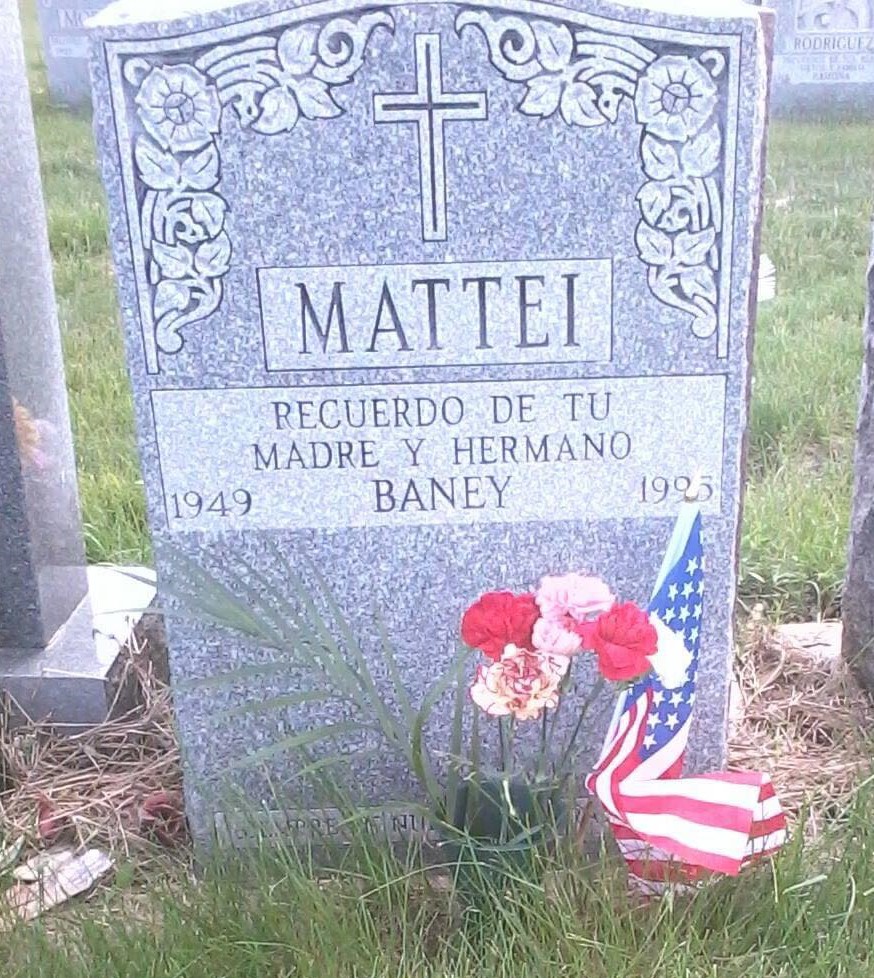
I love my father for who he was and cherish the memories of the last years of his life, as well as the love he shared for me and my children. I believe he wanted to make up for his wrongdoings.
Domestic violence of any sort remains deep within our psyche. On a subconscious level, it impacts every aspect of our being, from our own self-worth and self-image to the choices and actions we take in all our relationships with self and others.
If you or someone you know may be in an abusive relationship, contact the National Domestic Violence Helpline by visiting the website or calling 800.799.SAFE or texting “START” to 88788.