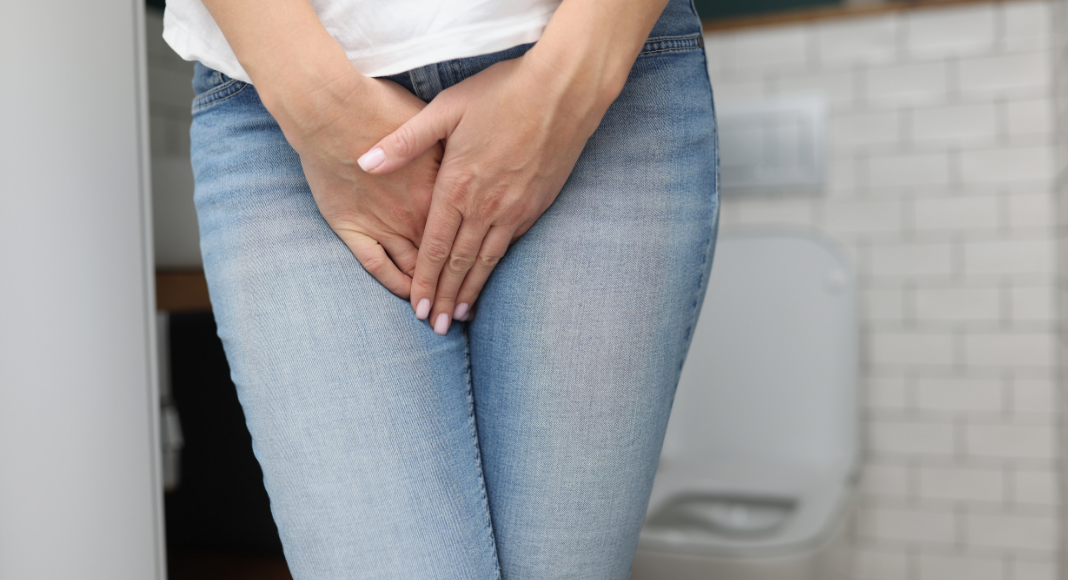
 When my baby was one week old, a friend sent me a meme of a woman gifting another woman a goodie bag full of pantyliners. The text read: “Welcome to Motherhood: You Now Pee a Little Every Time You Sneeze.”
It made me chuckle. Since I became a mom, I have heard (and cracked) my share of mommy jokes. From the scattered mess of a “mommy brain” to deflated balloons that we call “mommy boobs” and from heart-shaped mom butt to our guilt-ridden mama heart. It seems one of the best ways to cope with this crazy life that gets wilder every day is to have fun with it…right? So I get it. If you have to wear pads to catch pee and it’s embarrassing to talk about it, joking about it can definitely help.
But unlike mom brain and mom boobs; mommy bladder is not inevitable. You don’t have to live with it.
Mommy bladder, otherwise known as “urinary incontinence” is extremely common. It affects 1 in 3 women in the first year after pregnancy and more than half of women over a lifetime.
It’s an issue that a LOT of women (from my hairdresser to my manicurist, from my tax gal to my nanny) ask me about. So let me describe why it seems like your bladder has turned against you when your body should start to feel like it’s old self (instead of being a baby incubator).
1. Pelvic Floor Weakness and Injury
The pelvic floor is a sling-like muscle that sits underneath the bladder and is responsible for “closing the hose” when you cough/sneeze/laugh and drive some pressure downwards. As the baby passes through the vaginal canal, this muscle has to stretch 200% of its natural length. Due to this exceptionally strenuous stretch, there is often some degree of pelvic floor muscle injury that happens during childbirth.
This injury can range from overstretching of these muscles leading to mild weakness to large tears of this muscle leading to significant weakness. As this muscle weakens, the hose isn’t as tightly closed as we would like it to be. The result is PEEZE (read pee+ sneeze).
2. Cesarean Scar
The deceptively small-looking cesarean scar actually goes deep and passes right above the bladder before reaching the uterus. When this scar doesn’t move and stretch as the normal tissue does, it can restrict the filling of the bladder right underneath it. Typical symptoms with cesarean scar are needing to pee often and having sudden strong urges that may lead to leaking.
3. Pelvic Floor Tightness
It sounds counterintuitive but sometimes pelvic floor tightness can also lead to leaking. During childbirth, many times muscle injury leads to a protective guarding of this muscle. The spasm keeps the muscle from working properly, resulting in leaking. Typical symptoms with pelvic floor tightness are a sudden urge to go to the bathroom and leaking on the way.
What can you do?
Despite what we have been told about motherhood and peeing our pants, this issue is totally resolvable by seeing a pelvic floor physical therapist. Pelvic floor physical therapy is used to treat various symptoms, such as urinary or fecal incontinence, constipation, or pain during intercourse. It is considered routine care for women after having a baby in many other developed nations. Research shows that between 50 and 80 percent of women tear pelvic skin or muscles during childbirth.
Is there any other type of muscle injury that wouldn’t immediately warrant a referral to a physical therapist? But information regarding this type of postpartum service is seriously lacking in the American gynecological care.
In America, women are often dismissed or told to “do their Kegels” at home. Research shows that 1 in 3 women do not know how to perform Kegels and Dr. Google isn’t always a good help! Also, Kegels aren’t always the answer to leaking. Many times, you need to relax the pelvic floor (instead of always contracting it), work on your abdominal muscles (they support the bladder!), and work on those tight hips (hips and pelvic floor are bffs!). The good news is that more than 90% of women who enroll in pelvic floor physical therapy are leaking less in two months! And data never lies.