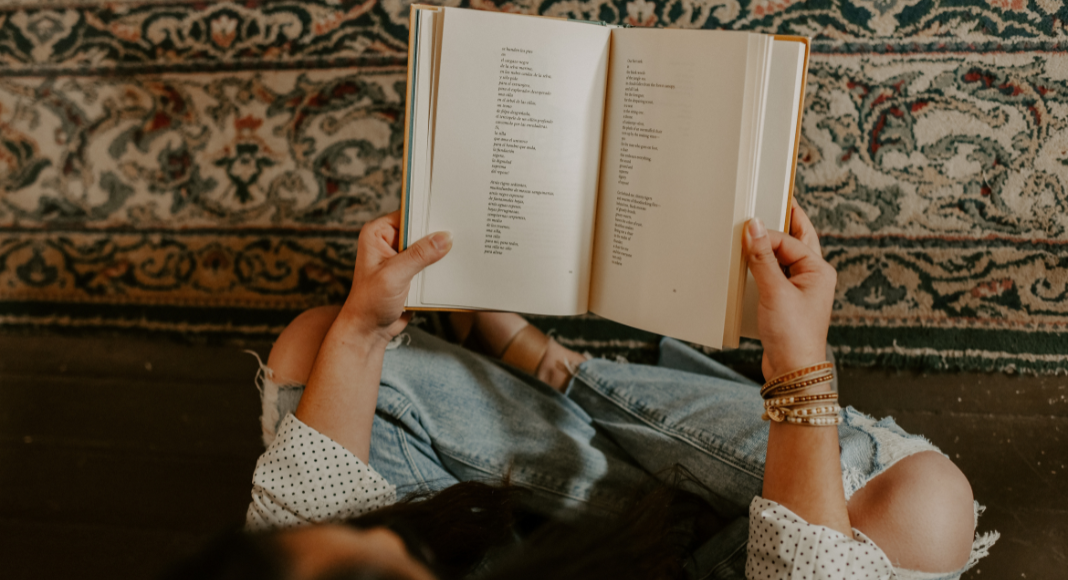
 Since becoming a mom, my love for reading has grown. Bedtime reading was a routine established many years ago with my oldest (born August 1989), starting with nursery rhymes, classic folktales, fairytales, and stories.
Visits to our local library have always been a thrill. However, when my children attended high school, their interest plummeted, especially when they were subjected to reading material not of their choosing, like Shakespeare, Harper Lee, and so forth. As they became young adult readers, they each had their interests: mystery, romance, comics, or classics.
But not one of them enjoyed poetry.
Now that I have been homeschooling my youngest (born March 2010) since September 2020, the same is true for her. She does not like to study poetry. She concludes that we should avoid learning poetry since we decide the curriculum and create our lesson plan.
However, it’s important to me that she learn to read, analyze, and understand poetry even if she decides not to further her English Literature education, especially since April is National Poetry Month. There’s a reason why poetry is a requirement despite one’s college major. Poetry is included in the curriculum for Composition I (ENG 101), a prerequisite for most college courses.
When I was in high school, I often wrote poetry in my journal (diary). Poetry allowed me to express my feelings, thoughts, and opinions without having to pay attention to sentence formation and punctuation. To me, it was shorthand for deep contemplation—a free form of artistry with pen and paper.
Poetry is how songs are created. Some stanzas are short and simple. Repetition can be used and emphasized without criticism from the reader. There is no judgment because it is your priceless masterpiece. Instructors may give suggestions on structure or advice on word placements, but the poet has the final say.
Poetry is freeing. There are no bounds.
While rearranging my daughter’s room this winter, I came across my own keepsakes from high school: some of my artwork, journals, memorabilia, and even a publication of my poetry submission. I had forgotten I had written the poem “The Pain of a Teenage Mother.”
I’m not a boastful person. I don’t care to share much of my past with my children or anyone, really. I’ve been a mother most of my life, and I have always focused on my children’s goals and education while placing my own on the back burner. I typically disclose my experiences only when relevant.
Finding the White Plains High School 1991 Roar Publication Vol. 31, No. 1, Literature and Art Book allowed my daughter to understand what poetry means to me. It reminded me of something I had forgotten, and I finally understood why I had been so eager to teach her poetry.
I hoped she would understand that, like her artwork, poetry is a masterpiece of its own, expressed with words that are not always direct.
So, to make poetry exciting, I resorted to placing tiny, folded pieces of paper listing the names of popular titles and famous authors into a container that my daughter randomly selected.
I do not have a degree in English or education, but I love to learn. Most of all, I love to teach! I love how children are eager scholars. I love how, based on our attitude and with enough enthusiasm, we can help steer their interest.
I have to say this year (9th grade) has been the toughest when it comes to teaching English Language Arts. I found solace when she received a free book while shopping at Barnes & Noble, consisting of three short stories by Edgar Allan Poe. When she learned about the author’s creation of the gothic genre, she was eager to learn more about his work.
I decided to research some of his poetry pieces and incorporate them into a lesson. This opened her idea to reading more poetry. No, she still isn’t a fan of poetry. But at least we can now talk about why Edgar Allan Poe is her favorite and Robert Frost is mine.
Then, while watching Kendrick Lamar’s Super Bowl halftime performance this year, I was intrigued by his song lyrics. My daughter took notice and asked if I understood what he was saying. While enjoying the music, I replied, “Yes, it’s so deep. It’s not just rapping; it’s poetic, and he’s speaking on many subject matters.”
It didn’t take long for others to notice. The next day, a few homeschool groups on Facebook shared material covering his lyrics to be used in a lesson plan. Just as quickly as I received that information, my daughter saw many posts on TikTok breaking down the lyrics and discussing the issues the singer addressed. I couldn’t believe it when my daughter shared her findings with me. We finally sat down and discussed the link between poetry and music.
Finding something in common with our teenagers is a wonderful feeling as a mom. The adolescent years are the toughest. They are pushing for independence while we try to steer them in the direction we think is best. So, when common ground exists, we should submit and enjoy the moment while it lasts.