 Food allergies are a growing food safety and public health concern that affects an estimated 8% of children in the United States (about 1 in 13 children). There is no cure for food allergies. Strict avoidance of the food allergen is the only way to prevent a reaction.
Schools and daycares have systems in place to manage food allergies. However, it is important to educate children and family members about food allergies so the school environment can remain healthy and safe.
What Are Major Food Allergens?
While more than 160 foods can cause allergic reactions in people with food allergies, the law identifies the 8 most common allergenic foods. These foods account for 90 percent of food-related allergic reactions and are the sources of many other ingredients. These include:
- Milk
- Eggs
- Fish (i.e., bass, flounder, cod)
- Crustacean shellfish (i.e., crab, lobster, shrimp)
- Tree nuts (i.e., almonds, walnuts, pecans)
- Peanuts
- Wheat
- Soybeans
Most schools and programs maintain a peanut-free or nut-free policy. Teach your children how to read labels and to know whether they are bringing in food items containing one or more of the main allergens, and to be mindful of other children who may have food allergies in school.
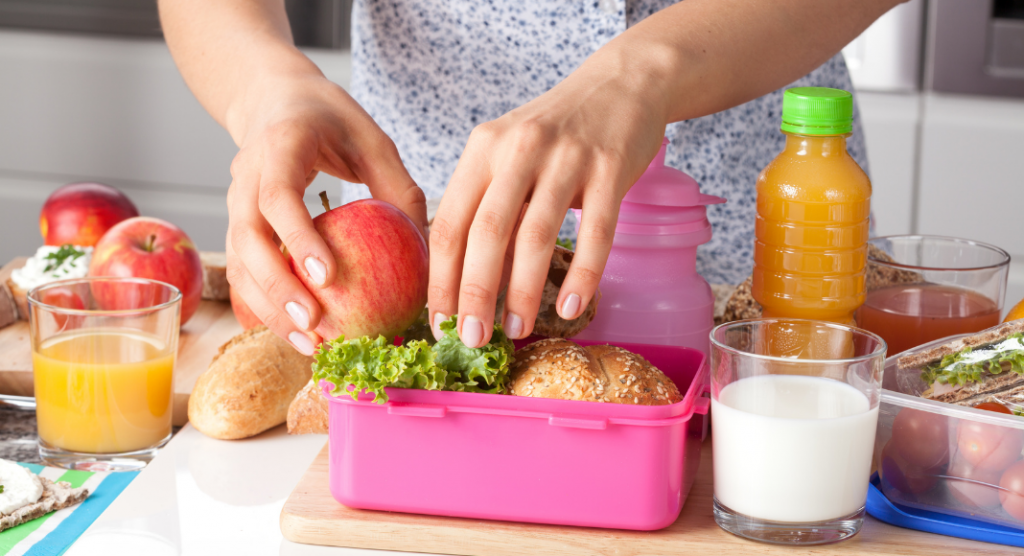
When choosing good foods to send to school, you want to send food that is easy to transport, healthy, and safe for everyone in the classroom.
- Real food vs. processed food: Real food for kids should be our priority when selecting meals and snacks.
- Incorporate lots of fruits and vegetables!
- Food pairing: Pairing carbohydrates with a protein and/or fat is a good way to provide lasting energy.