














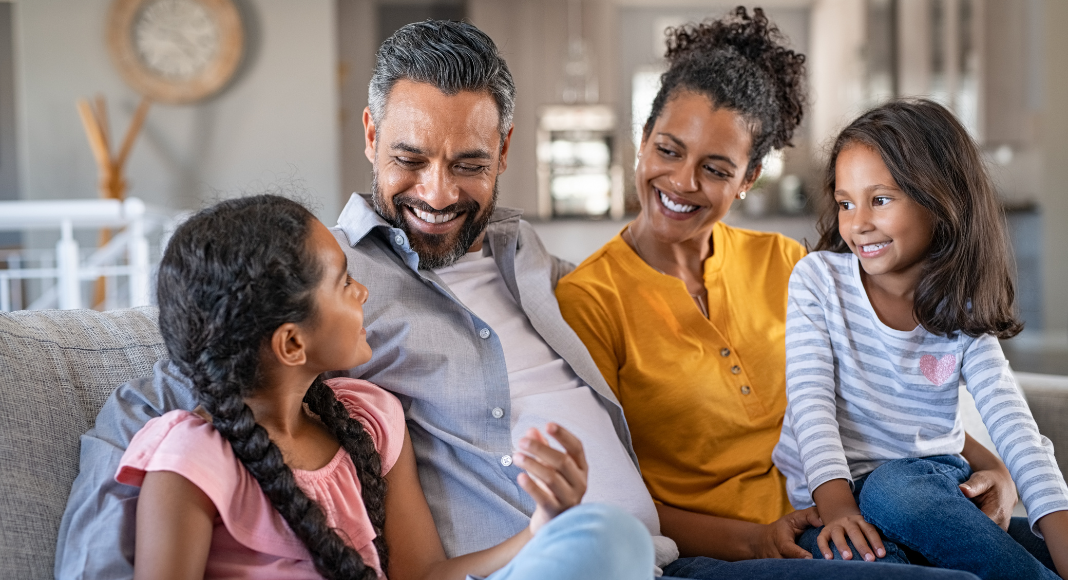
 I heard someone say, “Your kids feel safe in the home you provide them. Your kids want to come home and leave all the world’s worries behind. Be proud, be happy—you’ve made it. You made this possible for them.” It immediately took me back to my childhood. I never liked being home.
I felt a weight lift off my shoulders every day when I left home to go to school or anywhere else, really.
I remember the first day of first grade very vividly (I didn’t go to kindergarten). All the kids around me were crying, clinging tightly to their moms and refusing to let go. I was excited and confused by their reaction. My mom wasn’t there to cling to, and even if she had been, I would’ve run to the teacher I had just met instead.
Every single day, on my way back home from school, I felt a dreadful knot in my stomach tightening as I got closer to home.
My kids love being home. They feel safe, supported, and cared for. I know this because they tell me. I should be happy and proud of myself. As a mom, I thought I couldn’t fathom offering less. But as a child, that feeling was a dream.
I grew up dreaming of a home just like this. I dreamt of a mom just like me. I’m actively breaking the cycle.
Recently, my siblings and I realized that we were raised by a narcissistic mother. At first, I thought it was just me. She didn’t like me for some reason, and it must have been my fault. After I finally cut her off, my siblings started to share their own experiences with her, encouraged by my “brave” move.
Growing up, she constantly turned us against each other, so we were never close. I was her emotional punching bag, so from my perspective, I thought it was just a “me” problem. And I never understood why. I even had this fantasy that my real mom was out there somewhere, that she loved me, and would surely find me one day.
My siblings’ venting made me feel a bit better. I found out that she just used another punching bag in my absence. I finally realized that it wasn’t me. I wasn’t flawed. After connecting all the dots and recalling her behavioral patterns with everyone else close to her, we began our healing journey, and it’s not an easy journey in any way. It’s actually heartbreaking.
We each cope differently. While one sibling is non-confrontational and prefers to get along to maintain peace, another keeps minimal contact and has learned not to react to her verbal and emotional attacks. A third is adamant about moving away from her to protect themselves. And then there’s me, who cut her off completely over ten years ago, and that’s what I chose to do to keep my peace.
While we don’t choose our families, we can still choose how we react and the person we want to become.
Instead of anger, guilt, and self-doubt, I can finally accept the fact that there was absolutely nothing I could have done to change the way she treated me. I also stand by my decision to cut her off. After all, I have the right to protect my well-being and my family’s well-being (the abuse extends to the grandchildren as well; I couldn’t allow it to go on).
I can now grieve the relationship I’ve always longed for. I needed to accept that I don’t have a loving and caring mother. That’s fine—I survived, nonetheless. That’s what matters, and I’m now breaking the cycle.








Excellent writing, as usual.
Thank you!
Comments are closed.