These days, I spend a lot of my time thinking about kids and learning. I run a vintage and antique rug business, volunteer in my community, and provide neurodiversity training for businesses and organizations. I’ve recently obtained my Master’s in Education in Instructional Design and Ed Tech, launched executive functioning skills support for unique learners, and am working toward my New York State teaching certification to better support students as a specialized tutor and consultant in alternative learning environments.
Which is why people are often surprised when I tell them this:
For most of my life, I was absolutely certain I wasn’t going to have kids.
“It’s just not for me,” I’d say. “Too much work.”
And yet, somehow, kids were always part of my life.
From age seven and up, I hosted arts-and-crafts afternoons in my garage for younger neighborhood kids. I was quickly recruited to start babysitting at ten. As soon as I could get my mom to sign off on working papers (14 going on 15), I began working at a summer camp for disadvantaged youth and stayed for four years, even helping with their off-season weekend programming.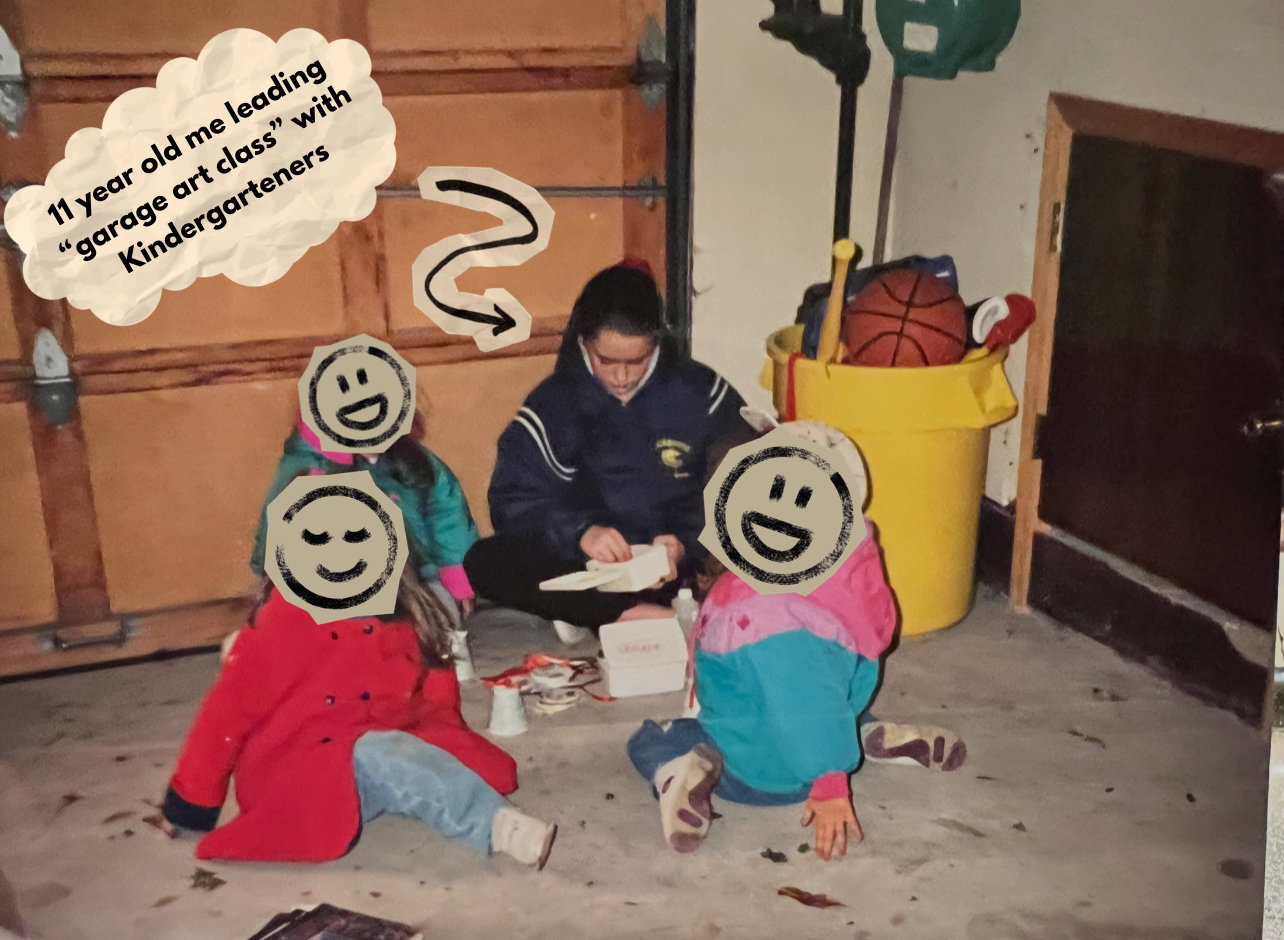
I worked at a gym, running kids’ birthday parties (shout-out to the dance parties I hosted, where, you know, I learned how to choreograph on the fly!). Later, when I went into photography, I gravitated toward family portraits and weddings, and, of course, babies and kids were the highlight.
Clearly, connecting with kids was never the issue, and in truth, was a calling for me.
Still, in my twenties, I remained hesitant. As much as I loved working with children, I wasn’t sure I’d be any good at the whole mom thing.
I was raised by a hardworking single mom in New Jersey in a very large and diverse town. I graduated with hundreds of others, and I often felt like a tiny ant in a massive brigade.
I had an interesting mix of traits growing up: I loved entertaining people and making others laugh, but I also wanted to be invisible. Somehow, that combination worked well in such a big school. I had a small group of beloved friends, but I could also blend into the background when I wanted or needed to. I felt like I could fit in anywhere, but also, like I fit in nowhere at all.
I was also very much what we used to call a latchkey kid. I’d come home from school to an empty apartment, make myself dinner, and occupy myself for hours. I was fiercely independent, so it worked. Honestly, I didn’t know anything different.
Despite the distance created by long work hours and the emotional weight of single motherhood, my mom carried us both. She gave me something incredibly valuable: the confidence to believe I could do whatever I set my mind to. And I never stopped doing just that.
From a young age, I was drawn to learning. I never needed to be the best at something; I just wanted to try it all. I wanted to be part of whatever interested me at any given time.
One year, I tried out for every sport imaginable, despite probably being the least athletic person around. I didn’t make a single team, but I did join track (no tryout required) and gave it a shot. That was always my approach: try it, learn something, and keep moving forward. I always walked away with experience, which felt the most valuable to me.
I didn’t excel in every subject in school, but I applied myself deeply. I showed up. I tried. I was never a quitter.
Eventually, in my early twenties, after my fierce independence led me down a few bumpy roads and questionable decisions (perhaps par for the course), something shifted. I realized that maybe motherhood could be for me.
It wasn’t some giant revelation. In fact, the turning point came abruptly when I realized that the person I was dating at the time was not someone I could imagine raising a child with, and that it mattered to me.
Shortly after that realization, I met my husband.
Something just clicked. Motherhood felt intuitive in a way that the most authentic parts of life often do. Like finding a hobby you love or an interest that fits, you don’t force it. It simply feels right.
For the first time, the question of whether I would be a good mother quietly disappeared. It was almost as if the best parts of myself woke up and said, “We’ve got this.”
Throughout my life, people often asked whether I was a teacher or planned to become one. I always loved working with kids, but I never seriously considered the profession. I gravitated toward creative work instead.
But when I had my boys, something became very clear: motherhood allowed me to bring together all the parts of myself.
I get to be their teacher, cook, guide, nurse, advocate, and biggest supporter. Every aspect of it requires creativity, patience, dedication, and, certainly, experience to do my best work.
Looking back now, it feels like so many threads of my life, my curiosity, my independence, my years spent working with kids, were quietly preparing me for this role all along.
And in many ways, that path has continued to unfold into the work I do today: supporting families, helping neurodivergent kids thrive, and rethinking how learning can look for children who don’t always fit neatly into conventional systems.
It turns out the thing I once dismissed as “too much work” became the work that matters most to me.