 Long-time Westchester County Mom readers may remember my coverage of my family’s journey through my son’s food allergies in years past. While he officially beat them thanks to a treatment called desensitization (or oral immunotherapy, OIT; also, big update… he no longer has food allergies, as confirmed by multiple food challenges during the summer of 2024!), our family will never forget the years we spent in the food allergy community, and the support we received.
My family is forever grateful for those who opened their homes and made my child’s life safe by asking about safe snacks, wiping counters, and reading labels. When your child has food allergies, any outing has the potential to turn deadly. From cracker crumbs at the playground to pizza and cake at a birthday party to snacks at a playdate, there is nowhere that allergic proteins are truly off limits.
That means kids with food allergies often get left out. So the friends and family who took the extra steps to make my son feel included were doing more than being kind; they were taking steps to ensure my son’s life felt normal while he navigated his environment safely.
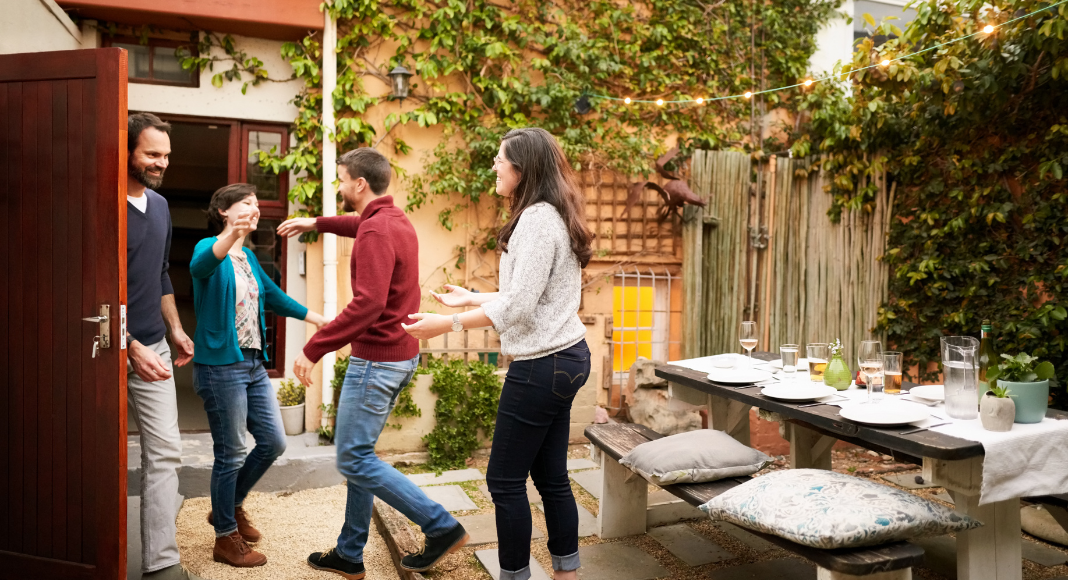
Living through the trauma of a life-threatening illness leaves marks on your life and family culture. In my home, one of those remnants is the desire to ensure none of our friends (or their children’s friends) ever feels left out during visits.
Here are some steps we continue to take to ensure our home is food allergy-friendly.
1. Asking visitors if they have food allergies or preferences in advance.
On every single party invite, we ask the same question: “Does your child or anyone in your family have food allergies or dietary preferences that need accommodation?” We also send reminders to let us know as the date approaches. For play dates, we send a text to ask. We cannot accommodate what we aren’t aware of!
2. Securing safe snacks and meals rather than making guests bring their own.
Once we have determined a guest has dietary restrictions, we ask about favorite foods and snacks. We also confirm which snacks we are getting. For birthdays, we often wind up getting gluten-free cupcakes (since many of our friends are managing celiac) for those who cannot partake in cake.
For dinner parties, we often wind up serving meals that let people build their own plates to accommodate many dietary styles and food restrictions; tacos, pasta nights, or a selection from the grill are three of our favorites for more casual affairs.
One of the saddest parts of managing food allergies is the exclusion kids encounter when they arrive at parties or play dates and can’t partake in snacks or cake. We never want our guests to feel that way! Furthermore, if we are inviting someone to our home, we want to make sure they don’t have to do extra work to attend. It is our job to accommodate our guests, not their job to make our event safe for them.
3. Wiping every counter and being extra cautious about cleaning up (including extra hand washing for kids).
Cross-contact is a serious concern when managing food allergies, and disinfectants and hand sanitizer don’t break down proteins that can kill. That means we are extra cautious about cleaning. Surfaces get extra wipe-downs after prep to ensure that we aren’t leaving behind residue. But counters and tables aren’t the only things you need to worry about.
Your sponge is likely caked with allergic proteins. Use a fresh one, or hand-wash items with a paper towel. And kids? Well, we all know how messy they get! We make sure our kids get a good wipe-down after eating whenever we have guests who are at risk for cross-contact reactions, so they don’t spread crumbs or oils that could make our friends sick.
4. Separate spaces for allergy-friendly foods.
Kids are messy eaters and grab everything. To ensure our guests’ food stays safe, we keep their dishes and food separate to prevent cross-contact between serving dishes or individual plates. Our children are repeatedly advised that the food in that area is for our guests only.
5. Participating in the Teal Pumpkin Project.
Each Halloween, we continue to offer trinkets and treats in separate bowls to ensure safety. We place our teal pumpkin on our doorstep, and sometimes even a sign on our door. I grew up regularly disappointed to find no candy I could eat at neighbors’ homes because of my peanut allergy.
While my son doesn’t remember, he also wasn’t able to eat some of the candy he received when he was young. No child should ever feel the disappointment of having to toss their Halloween candy or not take any at all. The Teal Pumpkin Project helps ensure Halloween is accessible to all kids (including those without food allergies who may not eat candy for medical or other reasons).
6. Having activities and celebrations that don’t revolve exclusively around food.
Typically, celebrations place heavy emphasis on food. Cake for birthdays (including cupcakes at school). A full feast for Thanksgiving. Trick or Treating. Easter egg hunts. Latkes at Chanukah. I could go on. Suffice to say, as a culture, we love our food. But this makes celebrations particularly painful for people with food allergies, who may find themselves unable to participate.
For that reason, I continue to send small goodie bags for in school birthday celebrations at my daughter’s preschool (and choose treat free bags for my son’s parties), prefer bringing crafts over snacks to events, and am generally wary of how much emphasis we place on food at parties when we know guests with food allergies will attend (though with a chef for a husband, being accommodating is a bit easier for us than some other families).