I spent most of my life wanting trees.
I grew up in Delhi. Not the leafy, sprawling bungalow version that appears in travel magazines. The real city version. Apartments. Traffic. Concrete. People. More people.
Nature was something you visited. Maybe that’s why I became obsessed with it.
Ever since I was a child, I wanted trees. Big trees. The kind with enormous canopies that make you want to sit underneath them and stay there for hours. During my pregnancy, my doula once asked me to imagine the safest place I could think of. I didn’t say my current home, or even my childhood home.
A giant green tree. That was the image that came to mind.
Even now, whenever we visit a national park, my instinct is to find a beautiful tree and sit under it. My husband’s instinct is to explain that bears also enjoy trees. This difference summarizes our marriage nicely.
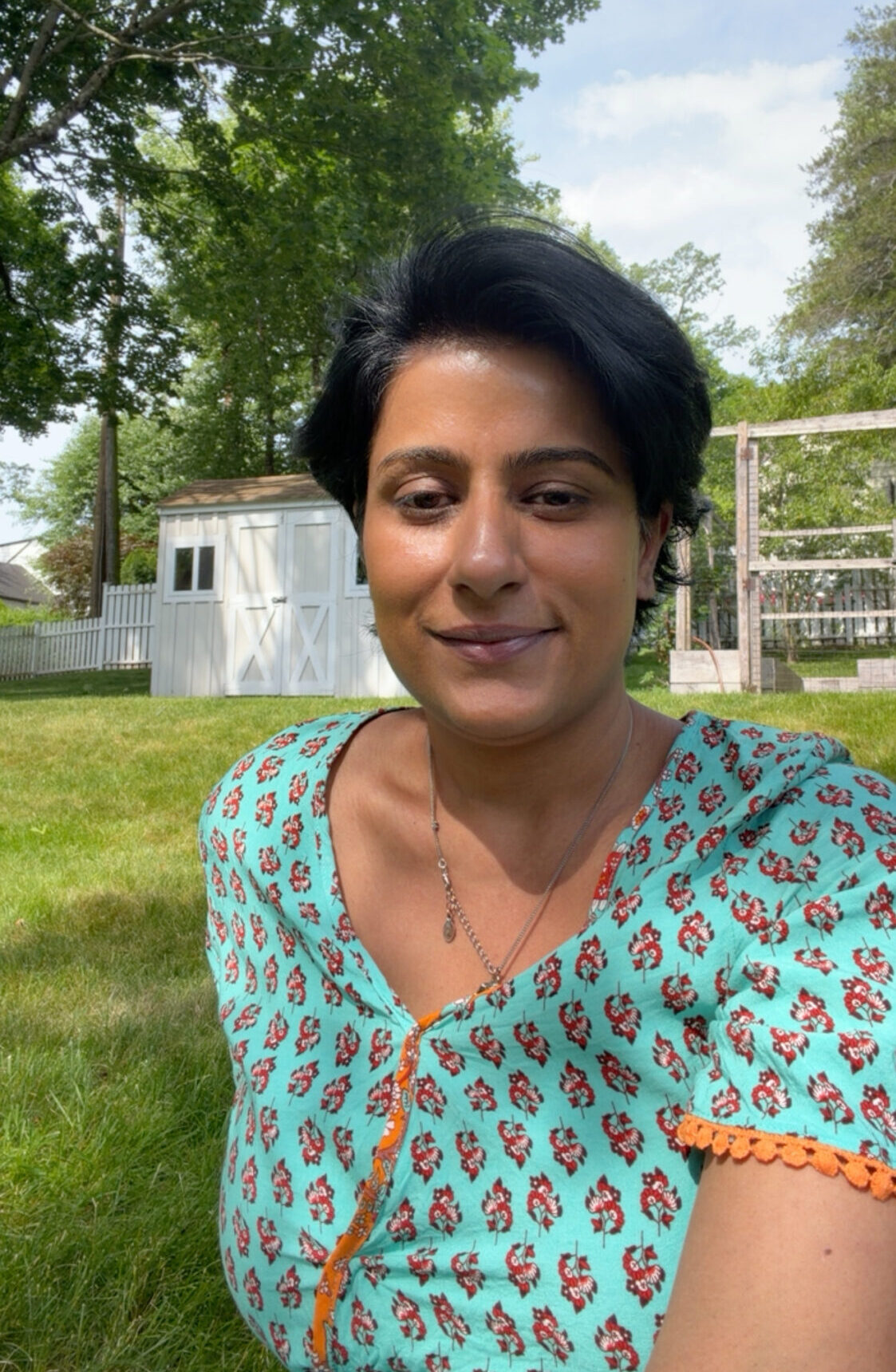
So when we bought a house in Westchester County, I felt like I’d finally achieved the dream.
Friends, I got the trees. I got all the trees. Massive oaks. Towering pines. Mature maples. Trees so old they were probably watching previous owners make equally questionable life decisions decades before we arrived.
I don’t know the exact age of all the trees on the property, but if you added them together, I suspect you’d get several centuries of accumulated tree experience.
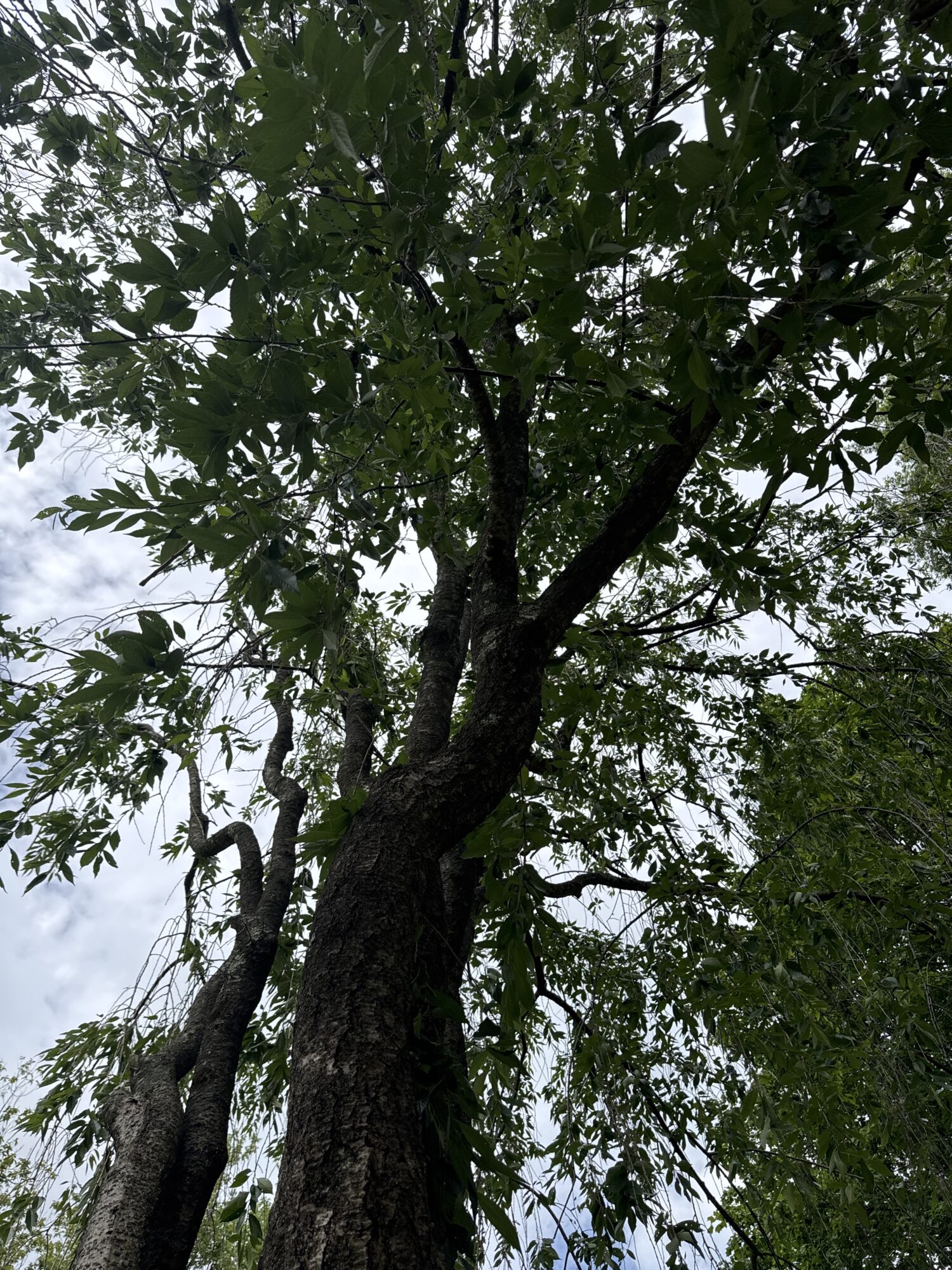
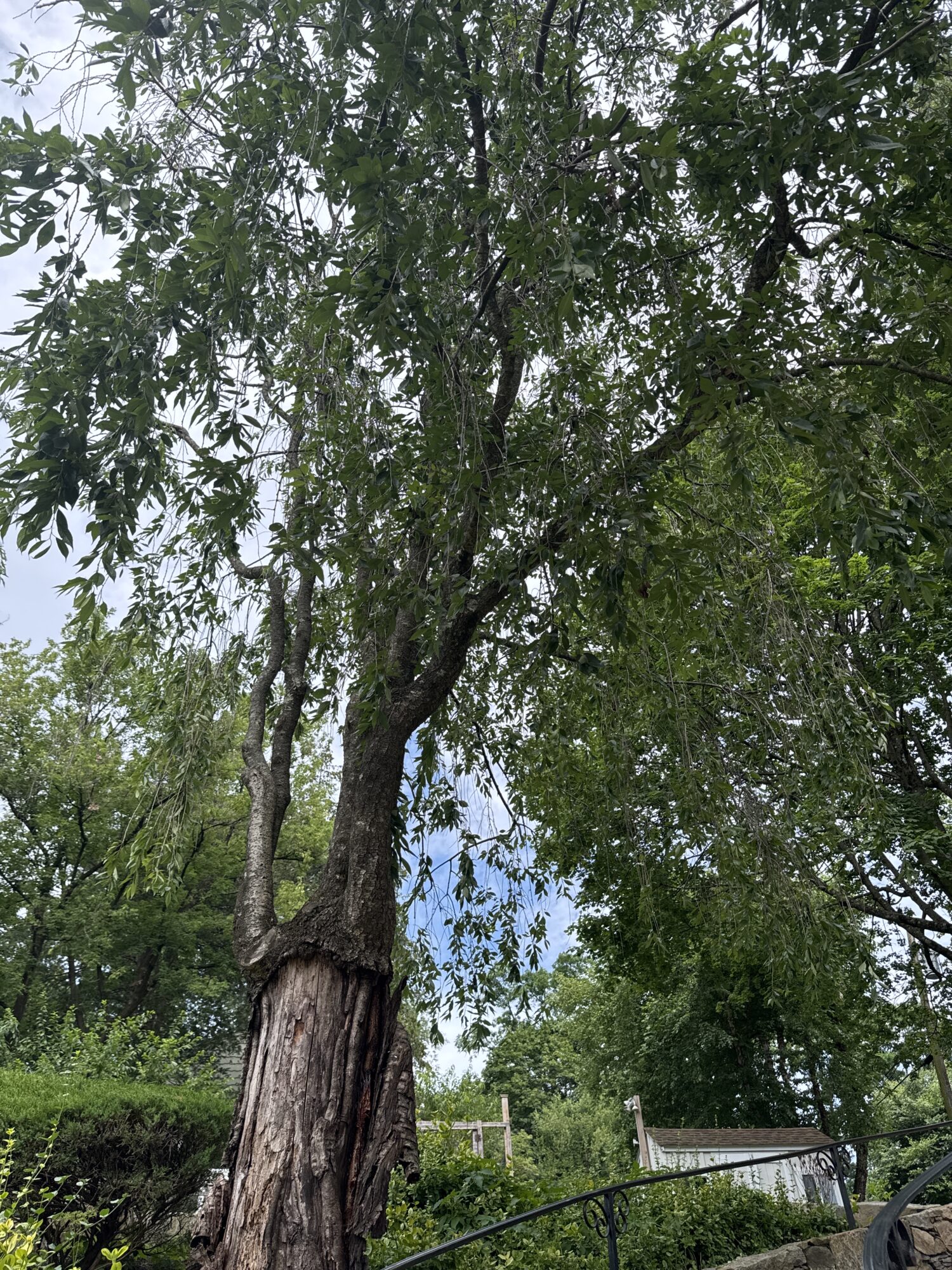
And they were beautiful.
The first day I went outside to sit among them, a worm approximately three feet long crawled directly toward me. I screamed. Not a dignified scream. A full city person’s scream.
The second time I tried, I settled down with every intention of becoming one of those peaceful suburban women who drink tea outside and feel connected to the earth. A spider landed on my hand.
The earth and I were not yet connected.
The third time, I finally had my moment. I sat beneath one of our enormous trees. It was quiet. It was peaceful. The sunlight filtered through the leaves. I felt exactly the way I had imagined I would feel for years.
The next morning, I walked outside and discovered that a massive branch had fallen directly onto the spot where I had been sitting.
Not nearby. Not generally in the area. Exactly where I had been sitting. I stood there staring at it. The tree was beautiful. The tree was majestic. The tree also could have killed me. That was my first clue that nature and I had entered this relationship with very different expectations.
Within three hours of moving into the house, my son developed poison ivy. Three hours. Not three days. Not three weeks. Three hours.
At the time, we didn’t even know what poison ivy looked like. This is the kind of thing nobody tells you when you grow up in apartments. We lacked the knowledge required to identify plants actively plotting against us.
Then came the tick education. If you’ve lived in Westchester for any length of time, you know that everyone has a Lyme disease story. Everyone. You mention that you’ve moved into a house with a yard, and suddenly people begin sharing Lyme disease stories the way grandparents share baby photos. At some point, checking for ticks becomes a daily ritual.
Then there are the frogs. The frogs deserve their own section because I am still working through my feelings about them. The house came with a pond. No fish. But four (so far?) resident frogs.
Then there are the squirrel boxes. The previous owner mounted squirrel boxes high in the trees. This continues to confuse me because there are already squirrels everywhere. I estimate that approximately ninety-four squirrels currently reside on this property. At no point have I looked around and thought, “You know what this ecosystem needs? Affordable housing for squirrels.”
There are birdhouses too.
And at this point, I am assuming there are bats around. Our camera has captured raccoons visiting the pond for midnight drinks. We’ve seen deer. We’ve seen foxes. We’ve seen coyotes. We have even seen a bobcat.
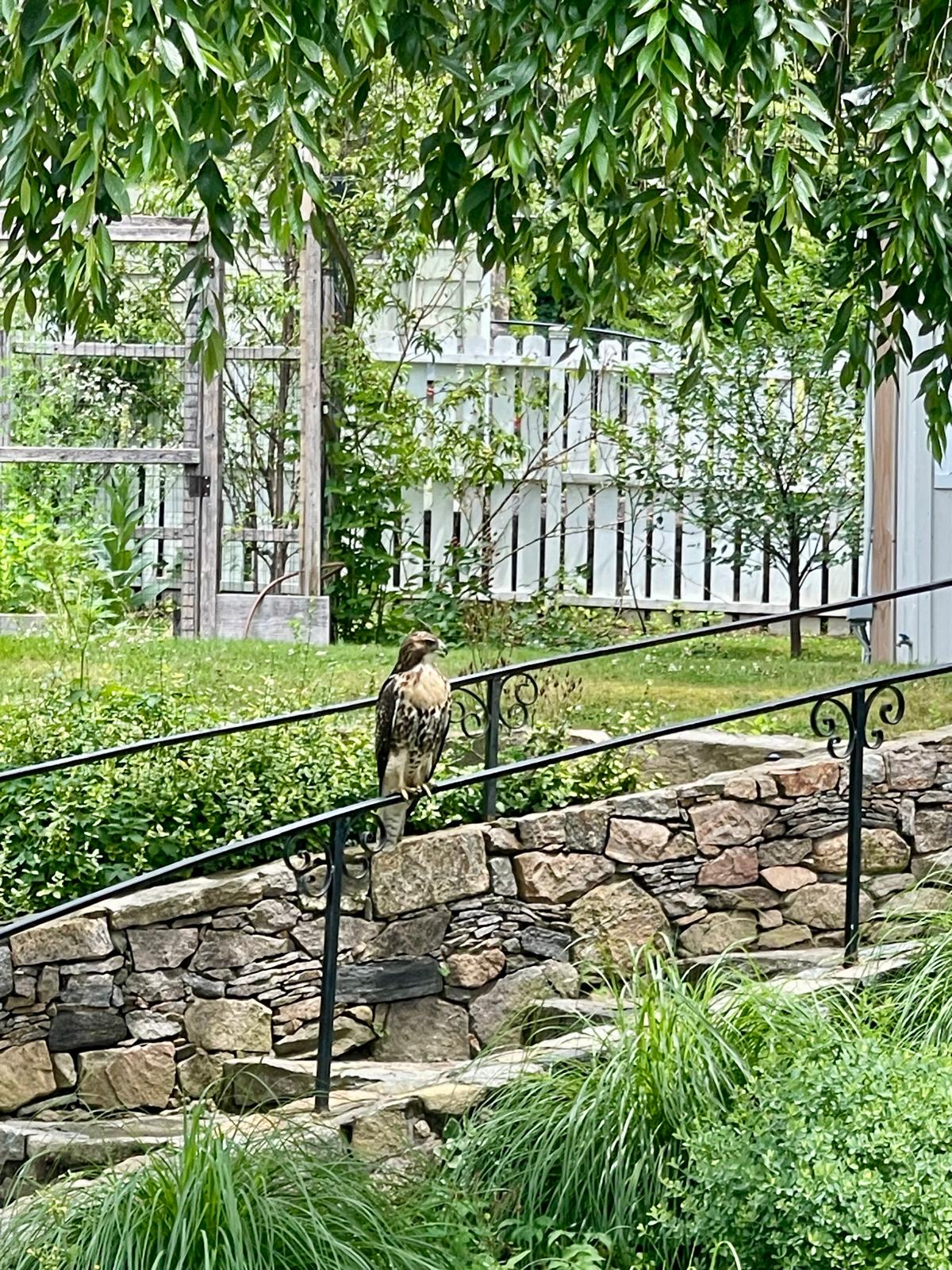
There is a hawk that lives nearby and patrols the property with the seriousness of a middle manager. There is also a neighborhood cat who arrives every time we grill and behaves as though she owns the place. Honestly, she might.
The longer I live here, the more I realize that I misunderstood what nature was.
When you’re a city person, you admire nature. You take pictures of it. You visit it. You sit under it for a little while and then return home. Living in nature is different.
Living in nature means understanding that the beautiful tree providing shade can also drop a giant branch. It means realizing that the frogs are eating something you’d rather have them eat. It means learning that the hawk has a job (to keep squirrel numbers under 100, I hope)
The fox has a job. The coyote has a job. Even the creatures you don’t particularly like have a place in a system that was functioning long before you arrived.
Every time I complain about one animal, someone explains why I need it.
Don’t like the frogs? Enjoy the mosquitoes. Don’t like the hawk? Enjoy more squirrels. Don’t like the coyotes? Wait until you see what happens when the rodent population takes over.
Nature is less a peaceful landscape and more a giant company where everyone has responsibilities, and nobody asks for your opinion.
And perhaps the biggest thing I’ve learned is that I don’t actually own any of this. Legally, sure. The paperwork says I do.
But those trees were here before me. Some of them were here before I was born. Some of them may still be here long after I’m gone. The frogs aren’t mine. The hawk isn’t mine. The ecosystem isn’t mine. I don’t control it. I participate in it.
For most of my life, I thought loving nature meant wanting to be surrounded by it. Now I think loving nature means respecting it. Respecting that it’s beautiful and inconvenient. Peaceful and dangerous. Generous and completely indifferent to your plans.
I still love sitting under a giant tree. I probably always will. The difference is that now, before I sit down, I look up first.